Product features
Designed to meet the needs of demanding industries and environments
Key application areas


Coatings and Adhesives
KETJENFLEX® CP accelerates cationic curing in epoxy systems and can be combined with tertiary amines for low‑temperature applications.
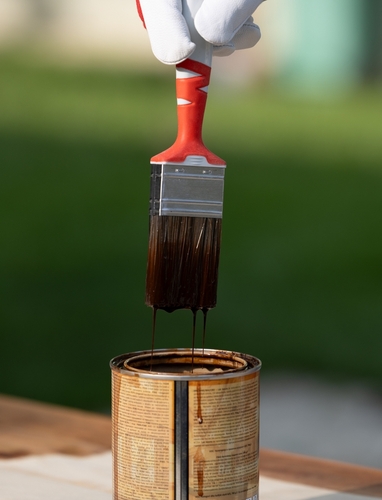
In amino‑cured wood coatings, it functions as the hardener component within the two‑component system.
A typical dosage of 2–3% on solids ensures optimal curing performance in these resin systems. Excess addition should be avoided because it can lead to resin hydrolysis and formation of unwanted by‑products.
In melamine‑based systems, the catalyst promotes crosslinking with amino‑formaldehyde agents such as hexamethoxymethyl melamine.
Within coil coatings, it delivers excellent curing behavior and maintains viscosity stability under oven‑aging conditions.
These systems also benefit from increased corrosion and salt‑spray resistance provided by the catalyst. Adhesion and intercoat adhesion are significantly improved in coil‑primer applications.
The catalyst supports consistent, durable performance throughout the coating process. It is equally suitable for use in aqueous melamine‑based veneers.
Esterification catalyst
KETJENFLEX® CP serves as a versatile catalyst widely used in condensation reactions for producing fine chemicals. It effectively promotes processes such as fatty‑acid esterification, aldol and enol reactions, nitrosation of alkenes, and the synthesis of azo dyes as well as a range of other dyes and pigments.
Polyurethane prepolymers
Isocyanate prepolymers are usually viscous liquids, manufactured in mixed batch reactors. Being relatively reactive an acid stabilizer as KETJENFLEX® CP is added to increase prepolymer stability during stockpiling.
Electroplating
KETJENFLEX® CP is used as a pH regulator in electroplating processes. KETJENFLEX® CP (in combination with nitric acids) can be used for what is called the ‘bright dip’ giving a shiny surface to copper, silver, gold, chrome and nickel electroplated metal.
Coatings and Adhesives
KETJENFLEX® CP accelerates cationic curing in epoxy systems and can be combined with tertiary amines for low‑temperature applications.
In amino‑cured wood coatings, it functions as the hardener component within the two‑component system.
A typical dosage of 2–3% on solids ensures optimal curing performance in these resin systems. Excess addition should be avoided because it can lead to resin hydrolysis and formation of unwanted by‑products.
In melamine‑based systems, the catalyst promotes crosslinking with amino‑formaldehyde agents such as hexamethoxymethyl melamine.
Within coil coatings, it delivers excellent curing behavior and maintains viscosity stability under oven‑aging conditions.
These systems also benefit from increased corrosion and salt‑spray resistance provided by the catalyst. Adhesion and intercoat adhesion are significantly improved in coil‑primer applications.
The catalyst supports consistent, durable performance throughout the coating process. It is equally suitable for use in aqueous melamine‑based veneers.
Esterification catalyst
KETJENFLEX® CP serves as a versatile catalyst widely used in condensation reactions for producing fine chemicals. It effectively promotes processes such as fatty‑acid esterification, aldol and enol reactions, nitrosation of alkenes, and the synthesis of azo dyes as well as a range of other dyes and pigments.
Polyurethane prepolymers
Isocyanate prepolymers are usually viscous liquids, manufactured in mixed batch reactors. Being relatively reactive an acid stabilizer as KETJENFLEX® CP is added to increase prepolymer stability during stockpiling.
Electroplating
KETJENFLEX® CP is used as a pH regulator in electroplating processes. KETJENFLEX® CP (in combination with nitric acids) can be used for what is called the ‘bright dip’ giving a shiny surface to copper, silver, gold, chrome and nickel electroplated metal.

Downloadable resources
Contact us
Ready to explore partnership opportunities?
Discover how our 25 years of chemical expertise and unique product portfolio can support your business growth