
Product features
Designed to meet the needs of demanding industries and environments

EXOCOAT™ Ceramic+
EXOCOAT™ Ceramic+ delivers extreme hydrophobic and oleophobic protection, making surfaces easy to clean and resistant to graffiti. Its advanced organometallic nano-resin bonds strongly to steel, aluminum, glass, plastics, and old coatings. The transparent finish is highly abrasion and scratch resistant, with outstanding heat and UV stability. Application is simple by wipe, brush, or spray, and curing can be done at room temperature or with heat. PFAS-free and trusted by industry leaders, EXOCOAT™ Ceramic+ is designed for demanding environments where durability and appearance matter.
Aluminum wheels and rims
EXOCOAT™ Ceramic+ creates a hard, transparent ceramic shield on aluminum rims for lasting protection, backed by its organometallic nano‑resin technology. Its extreme hydrophobic and oleophobic properties keep rims cleaner for longer and make brake‑dust removal effortless. The coating enhances abrasion and scratch resistance, protecting rims from road debris and frequent washing.
EXOCOAT™ Ceramic+ bonds strongly to aluminum, ensuring high durability under heat, UV exposure, and aggressive cleaners. With simple wipe‑on or spray application and as PFAS‑free formulation, it delivers premium professional protection for any set of rims.
EXOCOAT™ Ceramic+
EXOCOAT™ Ceramic+ delivers extreme hydrophobic and oleophobic protection, making surfaces easy to clean and resistant to graffiti. Its advanced organometallic nano-resin bonds strongly to steel, aluminum, glass, plastics, and old coatings. The transparent finish is highly abrasion and scratch resistant, with outstanding heat and UV stability. Application is simple by wipe, brush, or spray, and curing can be done at room temperature or with heat. PFAS-free and trusted by industry leaders, EXOCOAT™ Ceramic+ is designed for demanding environments where durability and appearance matter.
Aluminum wheels and rims
EXOCOAT™ Ceramic+ creates a hard, transparent ceramic shield on aluminum rims for lasting protection, backed by its organometallic nano‑resin technology. Its extreme hydrophobic and oleophobic properties keep rims cleaner for longer and make brake‑dust removal effortless. The coating enhances abrasion and scratch resistance, protecting rims from road debris and frequent washing.
EXOCOAT™ Ceramic+ bonds strongly to aluminum, ensuring high durability under heat, UV exposure, and aggressive cleaners. With simple wipe‑on or spray application and as PFAS‑free formulation, it delivers premium professional protection for any set of rims.

Contact us
Ready to explore partnership opportunities?
Discover how our 25 years of chemical expertise and unique product portfolio can support your business growth
The whole range EXOCOAT™




Everything you need to know about EXOCOAT™ CERAMIC+
Is EXOCOAT™ Ceramic+ an end product or a formulation component?
EXOCOAT™ CERAMIC+ can be used as formulation resin for clear coatings mainly.
- Do not formulate with protic solvents.
- Avoid OH and NH functionality.
- Recommend dilution only.
What are the composition and chemistry of EXOCOAT™ Ceramic+?
It is a high-performance pre-ceramic coating resin – an organometallic polymer (nano-resin) that is delivered as a solution in organic solvent (approximately 60% active resin in n-butyl acetate). The resin consists of a low molecular weight hybrid polymer containing siloxane/organometallic segments with hydrophobic and oleophobic functional groups. When applied and exposed to ambient moisture, this polymer crosslinks into a ceramic network (often referred to as “liquid glass” coating) on the surface. The cured film is thus an inorganic-organic ceramic layer that is strongly bonded to the substrate. There are no isocyanates or heavy metals in its composition – it achieves its performance through sol-gel chemistry (moisture-cure silane technology) rather than through traditional cross-linkers. In summary, EXOCOAT™ Ceramic+ is essentially a covalently bonding ceramic coating in a bottle, consisting of a reactive nano-resin pre-dissolved in a volatile solvent carrier.
What substrates or materials can EXOCOAT™ Ceramic+ be applied on?
EXOCOAT™ Ceramic+ demonstrates strong adhesion to a wide range of non-porous substrates. It can bond covalently to metals like steel, stainless steel and aluminum, to glass and ceramics, and to common plastics such as polycarbonate (PC), polymethyl methacrylate (PMMA), ABS, etc.. It also adheres well to painted or clear-coated surfaces, meaning it can be applied over existing automotive or marine paints (for example, as a topcoat for added protection). The bonding is achieved via the polymer’s reactive groups that form chemical links with the substrate, giving very good adhesion (cross-cut adhesion score 0 on multiple materials – no flaking). In short, you can use EXOCOAT™ Ceramic+ on most hard surfaces – metals, glass, and plastics – and even over cured coating layers, as long as the surface is properly cleaned. (Porous substrates like unsealed concrete or wood are not typical use-cases, since the coating works best when it can form a continuous film on a smooth, non-absorbing surface.)
What performance properties does the cured EXOCOAT™ Ceramic+ coating have (hydrophobicity, hardness, chemical resistance, etc.)?
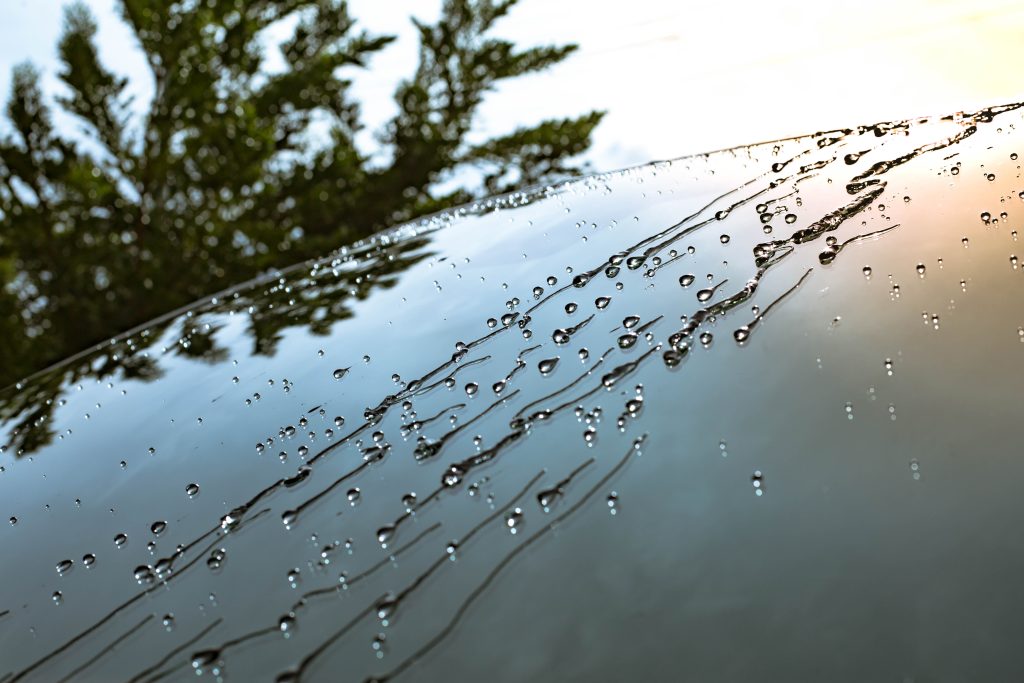
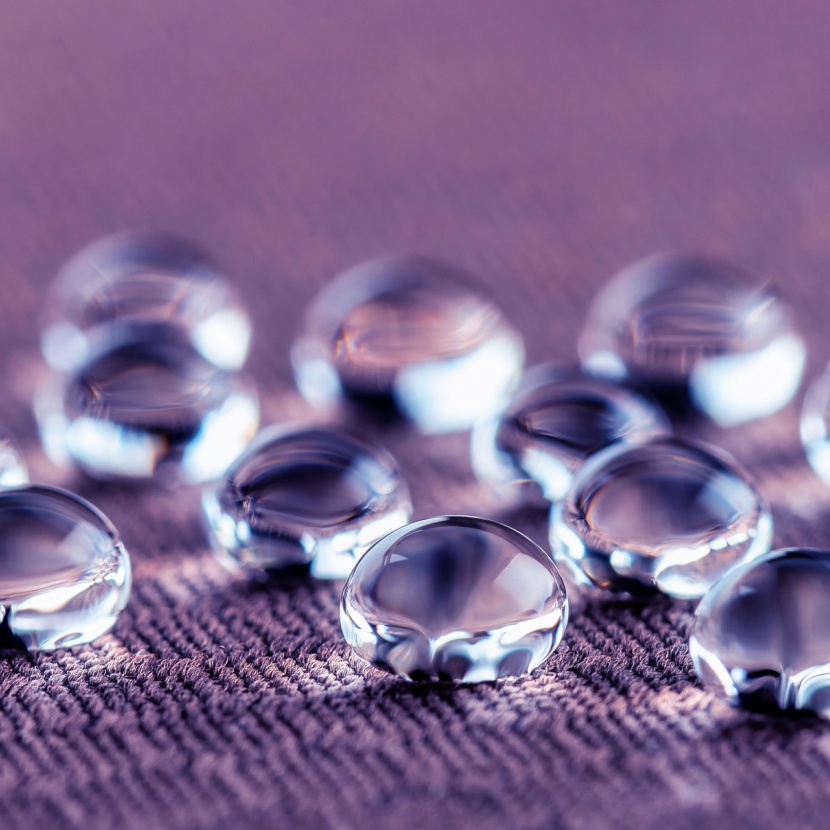
Hydrophobic & Oleophobic: The cured Ceramic+ film is highly repellent to water and oils. A very thin ~1 µm film yields a water contact angle around 100°, and if a slightly thicker film (~2–5 µm) is applied, the water contact angle exceeds 105°. This means water beads up and rolls off easily. It also shows oleophobic behavior – for instance, the contact angle with hexadecane (a hydrocarbon oil) can be around 55–60° for a few-micron film, which is significantly higher than an uncoated surface. In practical terms, the coating provides an “easy-to-clean” effect: liquids, dirt, and graffiti paints have trouble sticking to the surface, and can be cleaned off with far less effort than on an uncoated material. In fact, a key feature is anti-graffiti performance – spray paints or markers either do not adhere well or can be fully cleaned off without residues, often just using a high-pressure water spray or mild cleaner.
Furthermore it is:
- Hard and scratch resistant
- Chemical & Environmental Resistant
How is EXOCOAT™ Ceramic+ applied? What are the recommended application methods and film thicknesses?
Application methods: EXOCOAT™ Ceramic+ can be applied in several ways depending on the use-case and desired film thickness:
- For aftercare or detailing (very thin film), it is often wiped or hand-applied with a microfiber or lint-free cloth. In this method, you typically apply a small amount (a few drops) on the cloth and wipe it onto the surface in a uniform, thin layer. After a brief dwell, any excess is buffed off gently to ensure clarity. This yields an ultra-thin film (around 0.5–1 µm dry) that still imparts the easy-to-clean effect. This wipe-on technique is common in automotive or yacht detailing, similar to how consumer “ceramic coatings” are applied by hand.
- For industrial or OEM application (thicker film), spraying is recommended. EXOCOAT™ Ceramic+ can be sprayed using conventional air spray (HVLP guns) or advanced automated systems (robotic spray, rotary bell, etc.). Conventional HVLP or airless spray allows film builds from about ~2 µm up to ~25 µm in a single application, depending on how many passes are applied. A typical spray application might target ~5–15 µm dry film for a robust coating. The product sprays as a low-viscosity clear liquid and flashes off fairly quickly. Multiple thin coats can be applied “wet-on-wet” with a few minutes between, if a thicker overall film is desired. For very uniform films or high-throughput production, automated spraying (like a rotary bell atomizer) can be used to precisely control thickness (even down to ~2 µm evenly). Brush or roll application is also possible for small areas or patches, though spraying or wiping yields more uniform results.
What are the curing and drying conditions for EXOCOAT™ Ceramic+? Does it require heat or special curing?
Room-temperature (ambient) curing is sufficient for EXOCOAT™ Ceramic+. It is essentially a 1K moisture-curing system. After application, the solvent will evaporate and the coating will be dry-to-touch roughly within 30–60 minutes (at ~20°C, 50% RH). Within about 8 hours at ambient conditions the coating becomes dry-to-handle (sufficiently hardened to gently touch or reassemble parts). A full 7 days cure at room temperature is recommended to achieve the coating’s maximum hardness, chemical resistance and crosslink density. This 1-week period allows the moisture in the air to completely react with the film (hydrolyzing any remaining reactive groups) and for the network to fully “ceramize.” Notably, moderate humidity actually accelerates curing – the ideal is about 50–80% relative humidity; extremely dry air can slow the cure since water is a reactant in the crosslinking process. Users in very dry climates sometimes cure the coating in a humid room or place a pan of water nearby to ensure adequate moisture. Also, it’s advised to keep the coating out of direct sunlight or strong UV during cure (UV isn’t needed for curing and can heat the surface unevenly).
What is the typical shelf life of EXOCOAT™ Ceramic+, and how should it be stored?
Shelf life is 12 months from the date of manufacture (when unopened), under proper storage conditions. This is the period for which Axcentive guarantees the product will meet its specifications. In reality, stability testing has shown the product remains within spec even at 24 months storage, but the official recommendation is to recheck quality if it’s beyond one year. An unopened container stored in a cool, dry place will generally be usable for at least 1–2 years when kept stored between 5–25°C, away from direct sunlight and away from any sources of ignition or heat (since it’s flammable).
How does Axcentive ensure batch-to-batch quality consistency for EXOCOAT™ Ceramic+?
Every production batch of EXOCOAT™ Ceramic+ is subject to a thorough Quality Control (QC) testing protocol to ensure it meets defined specifications. Key physical and chemical parameters are measured and must fall within strict spec limits before the product is approved for sale.
In what packaging sizes is EXOCOAT™ Ceramic+ available, and what is the minimum order quantity?
The product is typically offered in 5-liter metal cans (containers) as a standard package. A 5 L can (about 5 kg net) is a convenient size for most customers and ensures the product is used within a reasonable time after opening. The minimum order is usually one 5 L can (one unit) for commercial sales. For sampling purposes, smaller quantities (e.g. 0.5 L or 1 L sample bottles) can be arranged with Axcentive or its distributors, but those are generally for trial evaluation.
Where is EXOCOAT™ Ceramic+ available for purchase? Does Axcentive supply globally?
EXOCOAT™ Ceramic+ (Axcentive’s EXOCOAT™ line) is available globally, either directly from Axcentive or through regional distributors. Axcentive Sarl is based in France (EU) and handles Europe, Middle East, Africa, and Americas, while Axcentive Asia Pte Ltd in Singapore covers the Asia-Pacific region.
As a note, because EXOCOAT™ Ceramic+ is classified as dangerous goods (flammable liquid), shipping to some locations might require a bit more coordination (hazmat shipping). But Axcentive is experienced in shipping worldwide under proper UN shipping classes. They have supplied customers ranging from New Zealand to the Americas. So yes, global availability is supported. If unsure, contacting Axcentive will quickly clarify the purchasing route for your region.
Are there any differences between EXOCOAT™ Ceramic+ and other products in the EXOCOAT™ range (like 151A, 151B, AC, etc.)?
This question goes a bit beyond EXOCOAT™ Ceramic+ itself, but to clarify, Axcentive’s EXOCOAT™ product line includes several specialized coatings:
- Ceramic+ – the one we’re discussing, focused on easy-clean, anti-graffiti for non-porous surfaces. Thin-film, solvent-based nano-ceramic.
- EXOCOAT™ 151A / 151B – these are water-based photocatalytic coatings (nano-TiO₂ based) for self-cleaning applications such as solar panels or walls. They have different chemistry (titanium dioxide sol-gel) and are not hydrophobic but super-hydrophilic (they work by a different mechanism). They offer anti-organic and anti-microbial properties when exposed to light. So, they’re quite different in use (also they are waterborne and have 12 month shelf life, but not solvent like Ceramic+).
- EXOCOAT™ AC – a chromium-free conversion coating for aluminum (sol-gel based primer). That’s again a different product aimed at corrosion resistance for aerospace. Not hydrophobic, rather a pretreatment.
- EXOCOAT™ CV (ClearView) – a glass & windshield coating (probably similar chemistry to Ceramic+ but in ethanol solution, designed for glass specifically).
- EXOCOAT™ SH (Superhydrophobic) – another variant, aimed at mineral surfaces for water-repellency, etc..
Is EXOCOAT™ Ceramic+ compliant with environmental and chemical regulations (REACH, RoHS, etc.)?
Yes, EXOCOAT™ Ceramic+ is compliant with major regulations for chemical products:
- REACH (EU Regulation 1907/2006): All intentionally present components of EXOCOAT™ Ceramic+ are either registered or exempt under REACH. The primary solvent, n-butyl acetate, is a REACH-registered substance and widely used. The polymer component is considered a polymer under REACH and thus exempt from registration (polymers are generally exempt, while monomers and additives are registered). Axcentive, as an EU-based company, fulfills REACH obligations including Safety Data Sheet provision and (when required) notification of any SVHC substances. Importantly, EXOCOAT™ Ceramic+ does NOT contain any Substance of Very High Concern (SVHC) above reporting thresholds. It’s free of substances like lead, hexavalent chromium, mercury, cadmium, etc.
What is the VOC content of EXOCOAT™ Ceramic+, and does using it have environmental implications?
The VOC content is approximately 400 g/L (about 4.0 lb/gal) as supplied. Essentially all the solvent (≈40% of the formulation by weight is butyl propionate) will evaporate during curing, which is a Volatile Organic Compound emission. This is relatively high compared to many modern coatings (which is why this is used in specialty applications rather than large-area architectural coating).
Do users need any specific personal protective equipment (PPE) or safety measures when working with EXOCOAT™ Ceramic+?
Yes, appropriate PPE is important:
- Gloves: Wear chemical-resistant gloves, such as nitrile, neoprene, or butyl rubber, when handling the liquid. This protects from solvent exposure and any potential skin irritancy. Disposable nitrile gloves (of sufficient thickness) are usually fine for intermittent contact; if your hands will be submerged or continuously exposed, use heavier gloves.
- Eye Protection: Use safety glasses or goggles. Splashes can occur when pouring from the can or when wiping overhead surfaces, etc. The solvent can irritate eyes, and the coating forming in your eye would be quite painful. So always protect your eyes.
- Respiratory Protection: If you are applying in an open, outdoor or large airy space, the ventilation might be enough. But if you are in a confined or indoor area, especially if spraying, you should wear a respirator. A half-face respirator with an organic vapor cartridge and a P95 or P99 particulate pre-filter (for the mist) is a common choice. This will prevent inhalation of solvent vapors and any spray mist particles. For one-off small hand application, many users might get by with just ventilation – the product’s odor will usually prompt you to ventilate well. But for professional application, a respirator is strongly advised to keep exposure well below limits.
- Body Protection: Wear normal work attire with long sleeves to avoid skin contact. If overspray is expected, use a paint coverall or apron that is solvent-resistant. The product doesn’t readily damage clothing (no strong acids/alkalis), but you don’t want it on your skin or soaking into clothes.
- Ventilation and Safety Equipment: Use in a well-ventilated area. If indoors, active exhaust fans are recommended. Also, have a class B fire extinguisher nearby (for flammable liquids) as a general precaution. Eye wash and safety shower availability is good practice if working in a lab or shop.
How should I dispose of leftover EXOCOAT™ Ceramic+ or the waste from its use?
Disposal of the product should follow local regulations for hazardous chemical waste:
- Liquid unused product: If you have leftover in the can that you will not use, do not dump it — it should be disposed of as hazardous waste (flammable). Keep it in the original container or transfer to a proper hazardous waste container. Your local waste management center or licensed contractor can take it. It will likely be incinerated in a chemical incinerator, which is appropriate for organic solvents (incineration will break it down to CO₂, water, and inorganic ash).
- Applicators and rags: Any solvent-wet rags, used masking tape with wet coating, or disposable brushes should be collected in a fire-safe waste container. Let them dry completely in a safe, ventilated spot (preferably in a fume hood or outside away from flames) — once all solvent evaporates and the resin has cured on them, they are much less hazardous. The dried resin on rags is inert (like a plastic). However, the rags themselves might be considered contaminated waste. The best practice is to treat them as chemical waste as well (since they could contain some uncured material in folds). Seal them in a bag and dispose via hazardous waste collection.
- Empty containers: If you’ve emptied a 5L can, there will still be solvent vapor and resin residue inside. Leave it open in a well-ventilated area (or under extraction) to let all residues dry out and vapors dissipate. Once it’s fully dry (no liquid, no strong smell), the metal can may be recycled or disposed of as paint can scrap according to local regulations. In many locales, empty paint/solvent cans that are dry can go to metal recycling or general trash, but check local rules. Do not reuse the can for other purposes unless thoroughly cleaned, and never for any food/drink container.
- Cured coating on parts: If you have coated an object and later need to dispose of that object, note that the cured coating is considered a solid inert material (like a cured paint film). There are no leaching toxins, so it doesn’t require special treatment – it can be disposed of as part of that object’s normal disposal (for example, a coated metal panel can be recycled or scrapped as normal; the thin ceramic film does not introduce hazards).
- Cleaning solvents: If you use solvents to clean equipment (e.g., you rinse your spray gun with acetone or ethyl acetate after spraying Ceramic+), those waste solvents containing dissolved resin should be treated as hazardous waste as well (combining them with your other paint waste solvent for disposal is fine).
What is the composition and chemistry of EXOCOAT™ CERAMIC+?
It is a high-performance preceramic coating resin (organometallic nano-resin) delivered as a solution in organic solvent (about 40% active resin). The resin forms a ceramic network (“liquid glass”) on the surface after application and exposure to moisture, resulting in a durable inorganic-organic ceramic layer. It contains no isocyanates or heavy metals and uses sol-gel (moisture-cure silane) chemistry.